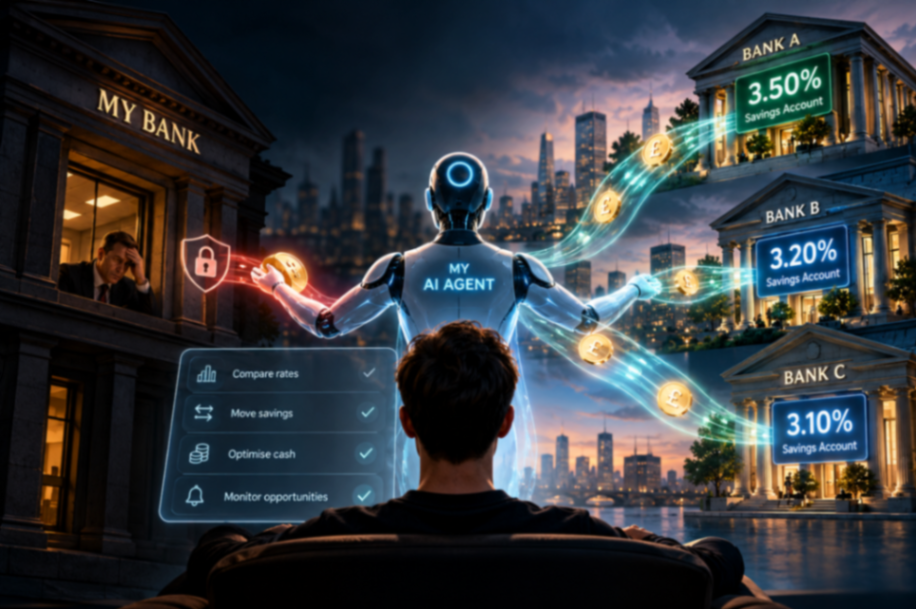
Companies are exploring how much work they can do with fewer people. Individuals can explore how much they can do without a company behind them. AI makes it easier to build tools, examine financial decisions and test ideas. Turning that capability into economic independence is the harder task.
On Saturday afternoon, I started building a fitness app. About two hours of my time went into the first version, with AI doing most of the development. Publishing it and installing it on my phone took some further experimentation. On Sunday morning, I trained with it.
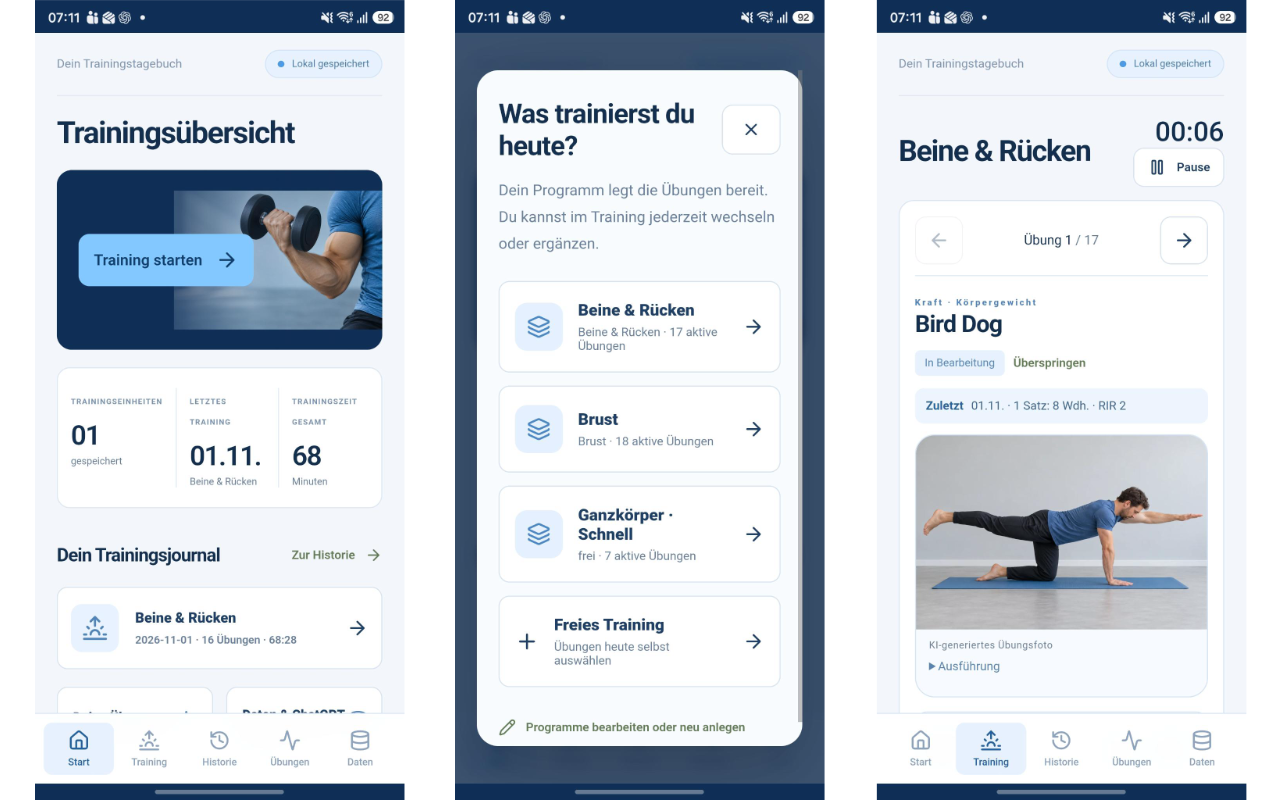
Afterwards, I found a few things to improve. Half an hour later, the updated version was published. The experience raised a bigger question: who captures the value when individuals can do more themselves? Starting has become easier. Earning a living remains a separate challenge.
The first Disruption is something we stop buying
I wanted a tool that fitted my training. Becoming a software engineer was never the objective.
Discussions about technology often jump straight to the next successful company. There is value before that: People solving their own problems. My app needed to satisfy one person. I could explain my requirements, try the result and change what bothered me.
The same pattern appeared in my finances. I uploaded bank documents and received a detailed cash-flow analysis and a first budget. For retirement, I explored pension payments, a lump sum and a combination, alongside investments, taxes and different market scenarios. The result became an Excel workbook I could adjust myself.
I have found no concrete error so far, although the financial model has not been independently validated. My financial knowledge helps me challenge assumptions. My training experience helps me judge the app.
What changed was my ability to implement something. A commercial consequence could be a purchase that never happens: A customer builds a suitable tool or prepares an analysis themselves. No new business needs to appear for an existing provider to face a different customer.
Building Tools with AI turns Knowledge into something we can use
Gutenberg’s printing system helped texts circulate more widely in fifteenth-century Europe. Online education later opened additional routes into learning. Today, the Open University’s OpenLearn platform offers more than 900 free courses derived from its curriculum.12
AI adds help applying knowledge to an immediate task. Instead of mastering every technical step before attempting an app, I could start with a problem I understood. Building, testing and learning became part of the same exercise.
That changes the professional relationship. A customer can arrive with work already done. The specialist earns their fee by finding weaknesses, identifying omissions and explaining consequences. Reproducing the same output in a more expensive format becomes harder to justify.
Employers are running the same Experiment
Inside a company, greater capability can become an argument for a smaller organisation.
In September 2026, BMW announced plans to reduce its organisational divisions and associated management functions by 20 per cent by mid-2027. It linked simpler structures and processes with more efficient use of artificial intelligence. The figure concerned management structures, rather than the entire workforce.3
Early October reporting described around 1,000 further planned job reductions at Volkswagen’s software subsidiary Cariad. The company connected its technological realignment, including AI-supported development, with changes to organisation and capacity. The reported number was not confirmed in its quoted statement.4
These examples do not establish that every affected role is directly replaced by AI. They show companies incorporating the technology into staffing decisions.
People leaving still need an income. Some will change employers or professions. Others will retrain or attempt a business. The technology involved in changing their old job could help them explore their next activity.
A working Product is still not a Business
My app has an unusually cooperative customer. I know his preferences and reach him without advertising. Paying customers would bring support obligations and different expectations. A website does not create demand. A business plan does not create revenue.
Nor should self-employment become a flattering description of having no alternative. Choosing a venture and attempting one after repeated job rejections involve different degrees of freedom.
Yet uncertainty does not cancel the value of a lower starting barrier. People can test ideas before committing further resources. Some will discover a business. Others will gain a skill or abandon an unpromising project.
The strongest objection is straightforward: creating something and making money from it are different jobs.
Independence also has limits. I shared sensitive financial information because I valued the analysis, although I would prefer local processing. I gained capability while relying on an external provider.
Greater Capability needs a practical Return
Employers
Explain which tasks may disappear and which capabilities will remain valuable. “Learn AI” offers little guidance to someone protecting their livelihood. Employees deserve clarity about how management intends to use productivity gains.
Banks
Meet capable customers where they are. Challenge their financial models, expose missing risks and assess resilience through cash flows, reserves and obligations. Recreating their analysis in a branded template adds little value.
Individuals
Use the new tools to test possibilities, while demanding evidence before betting a livelihood on them. My weekend project made that opportunity tangible. Companies are already calculating what greater capability could save them. If you can now do more on your own, whose future are you building?
Sources
- Europeana: From manuscript production to the printing press (2022)
- The Open University: Free courses
- BMW Group: Agilität, Effizienz, KI-basierte Innovationen: BMW Group stellt Weichen für mehr Profitabilität und Resilienz (2026)
- NDR via Tagesschau: Bei VW-Tochter Cariad sollen weitere 1.000 Jobs wegfallen (2026)